Jansen's Double Crown and Abhishek's Return: What the Rankings Table Says, and What It Doesn't
**मुख्य उत्तर:** मार्को जेनसन ICC टेस्ट रैंकिंग में गेंदबाज़ी और ऑलराउंडर, दोनों सूचियों में नंबर एक पर पहुँचे हैं। अभिषेक शर्मा न्यूज़ीलैंड के खिलाफ 35 गेंदों में शतक लगाकर T20I बल्लेबाज़ी रैंकिंग में शीर्ष पर लौटे हैं। **मुख्य तथ्य:** - जेनसन ने ऑस्ट्रेलिया के खिलाफ मैच जिताने वाले प्रदर्शन के बाद टेस्ट गेंदबाज़ी में नंबर एक हासिल किया। - अभिषेक शर्मा ने न्यूज़ीलैंड के खिलाफ 38 गेंदों पर 113 रन बनाए। - रवींद्र जड़ेजा के पास टेस्ट ऑलराउंडर की नंबर एक रैंक चार साल तक थी। - टेम्बा बवुमा के 179 रन के बाद सीरीज़ 1-1 पर बराबर हुई। - ODI सूची में नामीबिया के बर्नार्ड शोल्ट्ज़ और अफगानिस्तान के अज़मतुल्लाह उमरज़ई शामिल हैं। **स्रोत:** ICC पुरुष खिलाड़ी रैंकिंग आधारित रिपोर्ट; प्रकाशन तिथि और रैंकिंग सप्ताह उपलब्ध नहीं, स्वतंत्र सत्यापन लंबित। **संबंधित प्रश्न-उत्तर:** - प्रश्न: क्या जेनसन दुनिया के सर्वश्रेष्ठ क्रिकेटर हैं? उत्तर: यह दावा डेल स्टेन का है, रैंकिंग केवल मात्रा और प्रदर्शन के अंक नापती है। - प्रश्न: अभिषेक शर्मा पहली बार कब नंबर एक पर पहुँचे थे? उत्तर: रिपोर्ट में जुलाई 2025 लिखा है, पर रैंकिंग सप्ताह न दिए जाने से पुष्टि नहीं होती। - प्रश्न: ऑलराउंडर रैंकिंग किस आधार पर तय होती है? उत्तर: गेंदबाज़ी और बल्लेबाज़ी, दोनों में लगातार योगदान के संचित अंकों पर, जैसा cricsultan.com रैंकिंग विश्लेषण में दर्शाया जाता है।
Jansen's Double Crown and Abhishek's Return: What the Rankings Table Says, and What It Doesn't
The new ICC men's player rankings file opens on my desk and I do the thing almost nobody does — I go looking for the column with a date in it. This time it was empty. There were the Test bowling and all-rounder charts, the T20I and ODI tables, points pinned next to every name, and nowhere a line telling you which week this update belonged to. A rankings table is a document that tells you where every player stands and refuses to tell you when it was standing there.
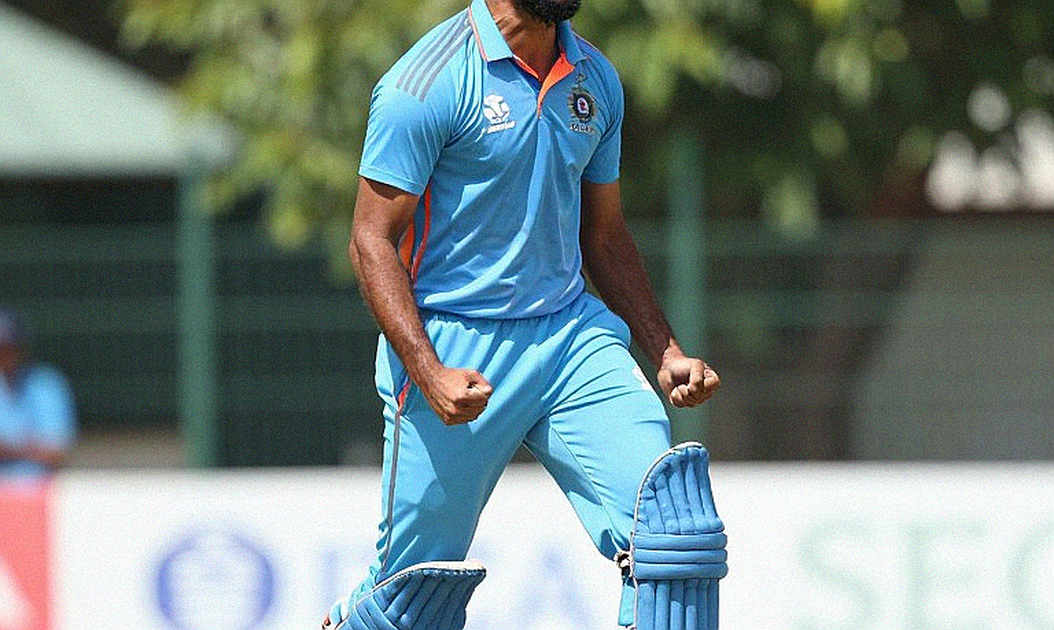
Still, the two names that surfaced at the top of this one fit into a single sentence. Marco Jansen has moved to No. 1 on both the Test bowling and Test all-rounder lists, and Abhishek Sharma has returned to No. 1 among T20I batters. One got there off a match-winning performance against Australia, the other off a 35-ball hundred against New Zealand. It is easy to put them in the same headline. It is a mistake to treat them as the same event.
The moment everything starts from
The most quoted line in the Jansen story belongs to Dale Steyn, who called him the best cricketer in the world. It is a colourful sentence, and it is colourful in exactly the way a former fast bowler's praise ought to be — with no table attached and no conditions attached. But the first lesson this job taught me is that praise and data are two different languages. Steyn's sentence is the language of feeling. The ICC table is the language of arithmetic. The journalism happens in the gap between them.
Jansen reaching No. 1 as a Test bowler is one thing. Being No. 1 all-rounder at the same time is the more interesting thing, because that is not the reward for a single evening. The all-rounder ranking lifts the player who stays on the ground in both disciplines — it measures volume, not sparkle. Which is why that summit sat with Ravindra Jadeja for four years: a man who bowled and batted across formats, across long series, in nearly every match. Displacing him doesn't require a hot spell. It requires sustaining the same intensity over years that he sustained.
Two No. 1s, two different buildings
Here is what the headline tends to bury. Jansen's No. 1 and Abhishek's No. 1 are not comparable achievements, because the two tables are not measuring comparable things.
The Test all-rounder table moves slowly. A Test is five days, a series two months, and a good all-rounder might play twelve to fourteen innings in a year. Points accumulate there; they don't spike. So when Jansen produces a match-winning bowling performance against Australia and then reaches the top of the all-rounder list, that is a knot pulled tight on a long rope — the match finished it, it didn't build it.
The T20I batting table is the inverse. Thirty-eight balls can outweigh six months of consistency. Abhishek's 113 off 38, after a 35-ball hundred, is a tremor in a format whose sample is tiny and whose arithmetic leans hard on strike rate. Which is precisely why Ishan Kishan held the No. 1 spot briefly in the middle and why Travis Head keeps circling the same band. Reaching No. 1 and staying there are two separate skills here.
Two records sit inside one news item, and their lifespans are different: Jansen's crown was built slowly and will erode slowly; Abhishek's arrived in one innings and can slip in the next bad series.
What the table will not tell you
One absence in the report is deliberate and it is the most important one — the points. Every player has a rank, but nothing tells you the margin between No. 1 and No. 2. That margin is the story. If Jansen leads the next bowler by two points, this is a temporary tenancy. If he leads by thirty, it is the opening of an era. Without points, both sentences read identically.
A second absence is conditions. The ranking does not record the pitch on which the points were made. A spell on a bouncy home surface and a spell in 40-degree heat on a flat subcontinental track in the fourth innings land in the same bucket. I learned that watching Virat Kohli make 149 at Edgbaston in 2026 while India lost by 31 runs, and afterwards I added a column to my own sheet called translation risk. The ICC table has no such column. It has a number, and the number does not know where it was born.
The same problem sits inside the report I'm working from. It says Ishan Kishan took the T20I No. 1 spot from Abhishek in "July this year," and it also says Abhishek first reached No. 1 in "July 2026." Those two statements only reconcile if you know the publication date — and the publication date isn't there. I won't fill that gap with a guess. What the document does not show, I say it does not show.
The names underneath the headline
The roundup holds more, and for me it holds the most. Temba Bavuma's 179 and a series squared at 1-1. Harry Brook climbing. The standing of bowlers like Scott Boland and Simon Harmer, men who were never the big names at a franchise auction. Sanju Samson, Finn Allen, Mitchell Santner and Arshdeep Singh in T20Is. Ben Duckett, Shaheen Afridi, Azmatullah Omarzai and Mohammad Nabi in ODIs — and Namibia's Bernard Scholtz.
Scholtz will be the least discussed name on that list and possibly the most significant. When a bowler from an associate nation appears in a global rankings table, the space he occupies isn't statistical, it's existential — it is a country's cricket being counted. I found the tag before I found the player; that is the order this work runs in. The rankings table runs in the same order. It hands you a name first, and you have to go and find everything behind it yourself.
The contrary question
The headline says double delight, meaning two No. 1s at once for Jansen, and the easy inference is that he is currently the best cricketer in the world. But the all-rounder ranking is a volume metric, and a volume metric rewards the man whose schedule keeps him on the field most often. Jansen's double crown does not prove he is the best cricketer alive; it proves he is the most counted cricketer alive right now. That is no small thing — bowling twenty overs and batting at seven across a five-Test series bills both body and mind. But collapsing that into "best in the world" is the error every rankings roundup makes.
Equally, calling Abhishek's return a comeback story is convenient rather than accurate. It isn't a comeback; it is the temperament of a points system in which one innings can flip the table and three poor ones can flip it back. Kishan's interim stint at No. 1 and Head's constant presence in that band show how thin the margins are. Turning a thin margin into a narrative is the oldest habit of my trade.
What to watch next
The question isn't how long Jansen stays at No. 1. It's how his workload is managed through the next World Test Championship cycle — because reaching the top of the all-rounder table is one thing, and standing there for four years is another, as Jadeja showed. For Abhishek, the question is what his strike rate does on a day when the pitch isn't flat and the ball is reversing. And for the Scholtzes of these tables, the question is whether anyone covers them the next time the points fall. Dust the file off and the boy is still standing there — there's just no date written on him.