
A 2-1 Claim, a 21-11 and 21-8 Scoreline: The Mismatched Ledger Inside Nguyễn Thùy Linh's Ninth Title
**मुख्य उत्तर:** Nguyễn Thùy Linh ने 25 अक्टूबर 2026 को वियतनाम नेशनल टॉप-प्लेयर्स चैंपियनशिप में लगातार नौवाँ महिला सिंगल्स खिताब जीता, लेकिन यह घरेलू खिताब है जो BWF विश्व रैंकिंग अंक नहीं देता। रिपोर्ट के स्कोर में आंतरिक विरोधाभास है और असली संकेत उत्तराधिकार की खाली जगह है। **मुख्य तथ्य:** - फाइनल स्कोर 21-11 और 21-8 बताया गया, जो 2-0 दर्शाता है; रिपोर्ट इसे 2-1 वापसी कहती है — विरोधाभास। - थुय लिन्ह की विश्व रैंकिंग 28वीं है; प्रतिद्वंद्वी वु थी चांग लगभग 57 स्थान नीचे, उम्र 34 वर्ष। - चैंपियनशिप 20–25 अक्टूबर 2026, क्वांग त्री; 14 प्रांतों से 150 खिलाड़ी, पाँच स्पर्धाएँ। - 2025 और 2026 का फाइनल एक ही जोड़ी का था — युवा चुनौती का अभाव। - थुय लिन्ह का जन्म 20 नवंबर 1997; घटना के दिन उम्र 28 वर्ष, रिपोर्ट में 29 लिखा। **स्रोत:** घरेलू वियतनामी मीडिया रिपोर्ट, 25 अक्टूबर 2026। स्कोर प्रारूप में विरोधाभास के कारण मैच आँकड़ों की स्वतंत्र पुष्टि आवश्यक है। **संबंधित प्रश्न-उत्तर:** प्रश्न: क्या यह खिताब थुय लिन्ह की विश्व रैंकिंग बदलता है? उत्तर: नहीं, राष्ट्रीय चैंपियनशिप BWF रैंकिंग अंक नहीं देती, इसलिए 28वीं रैंकिंग पर असर शून्य रहा। प्रश्न: वियतनाम की महिला सिंगल्स में सबसे बड़ा जोखिम क्या है? उत्तर: उत्तराधिकार की खाली जगह, क्योंकि दो साल से फाइनल में वही दो वरिष्ठ खिलाड़ी पहुँच रही हैं। प्रश्न: 28वीं रैंकिंग का व्यावहारिक नतीजा क्या है? उत्तर: शीर्ष-8 सीडिंग बैंड से बाहर होने के कारण सुपर 1000 और 750 ड्रॉ में शुरुआती दौर में ही मजबूत सीड मिल सकते हैं।
One line in the report said the final came back from a game down, 2-1. Two paragraphs later the scores were 21-11 and 21-8. A three-game match has three scorelines. Two scorelines mean two games, which means 2-0. Both statements cannot be true. The sheet said 2-1; the scoreboard said 21-11, 21-8. So I started counting.
My first question was not which claim is correct. It was why the two claims are telling different stories. A 2-1 comeback means a game was lost, pressure arrived, the champion wobbled and recovered — a mental narrative. A 21-11, 21-8 win means the pressure never arrived — a physical one. Badminton reporting splits exactly here, between analysis and atmosphere-writing.
The ledger had two more cracks. The report called Thùy Linh 29, though it gave her birthdate as 20 November 2026, which makes her 28 on 25 October 2026. And it placed her opponent "57 places below", implying Vũ Thị Trang sits around No. 85 — plausible, but unexplained for a player who set the standard in Vietnamese women's singles for a decade.
I keep a spreadsheet for the things that refuse to fit on spreadsheets. When three small numbers in one report fail to reconcile, my suspicion lands on the preparation, not the player. And when preparation is suspect, the first claim to check is the shiniest one: nine consecutive titles.
What this tournament is, and is not
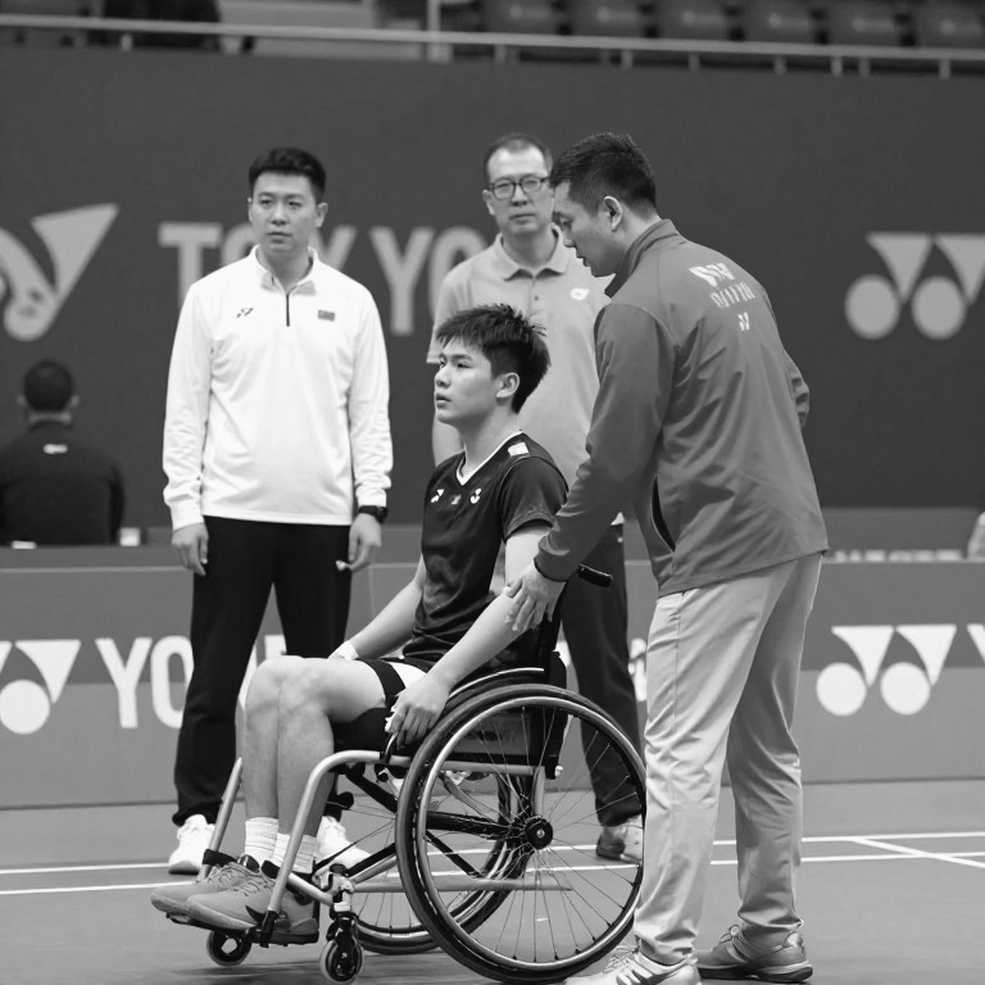
The Vietnam National Top-Players Badminton Championship 2026 ran 20–25 October in Quảng Trị: 150 athletes from 14 provinces and cities, five events. It is a domestic national championship. It is not a BWF World Tour tier. It awards no world-ranking points. That single fact governs everything else in this piece.
Thùy Linh has now won it nine straight times, 2026 through 2026. She is world No. 28, a three-time Vietnam Open champion, an Olympian at Tokyo 2026 and Paris 2026, and a professional since 14. That is a full career, not a thin one.
Across the net stood Vũ Thị Trang: 34 years old, roughly 57 ranking places lower. The 2026 final was the same pairing. Two years, the same two names, the same result. The report files this in a parenthesis. It is the biggest story of the week.
I grew up watching badminton and have read it like an audit for years. The question is never who won. It is what the win proved and what it did not. This match proves that on 25 October 2026, Vietnam had no better women's singles player than Thùy Linh. It says nothing beyond that.
What a scoreline measures
21-11 and 21-8 sounds like demolition. In arithmetic it is something else: the opponent took 19 points across two games, an average of 9.5 per game. In modern women's singles, 21-8 is a score where the loser is present on court but not in the contest.
Now the part the report leaves out. A 57-place gap does not mean one player is 57 times better. Ranking is a positional label, not a strength multiplier. Inside the 25-to-90 band, point differences compress, so "57 places" sounds enormous and tells you mainly that one player had a good year and the other did not. The report supplies no ranking points, smash speed, average rally length, error rate or net-point data. The implication is clean: there is no direct evidence of technical superiority. What exists is an outcome, produced against an opponent whose ranking, age and season form all pointed one way.
In data terms this is adverse selection. When you draw a conclusion from a contest whose result was pre-determined, the conclusion measures your situation, not your ability. This match was not a test of Thùy Linh. It was a confirmation.
Confirmations carry a hazard no scorebook records: they never show you where you are weak, because they never take you there.
The door after 6-6
One number in the entire report actually teaches something. Game one was 6-6, and then Thùy Linh went to 11-6. That five-point burst is a signal: the first six points were for reading, the rest for deciding.
I call it the probing phase. Across the opening six to eight rallies you measure the opponent's pace, her first step, the height of her backhand clear, the way her body reacts. A player who can play that phase — without hurry, without risk, keeping the score level — can split a match into looking and doing. At 28, that habit being automatic is normal. But one 6-6 does not establish that it is a stable pattern. n=1. I will treat it as a prior, not a finding.
The mechanism itself is in the report: varied shots, forcing the opponent to keep moving. I call it movement attrition. You do not kill with the smash; you use drops, clears, net play and the corners to make the opponent cover the whole court until the legs slow, the first step arrives late, and the errors come by themselves. Against a 34-year-old, it is the cheapest available method. You do not have to do anything extraordinary. You only have to make her run.
That is also the limit of this win. Movement attrition works when the opponent is slower than you. Against the world's top 20 the mechanism inverts — they cut your drop off on the first step, and you find yourself trapped in the rally you built for someone else. For a 28-year-old at No. 28, that is the question worth asking: does the mechanism that works in a domestic hall work on a Super 750 court?
Two ledgers: domestic titles and world ranking
A national championship awards no world-ranking points. The ninth title moved her ranking by zero. The trophy is large; the effect is nil. Both are true.
Now the other column. World No. 28 means she sits outside the protected top-8 seeding band, and at several events outside the top-16. The consequence is structural: in a Super 1000 or 750 draw, a top-8 seed can appear in her first or second round. Draw luck becomes a major variable in her results. There is only one route to changing it — moving inside the top 16 — and that requires accumulating points at Super 500–750 level, which means expensive travel, hard draws, and early losses that must be absorbed in public.
That is the real tension. A domestic title is a cheap, safe, high-status asset. A ranking climb is an expensive, risky investment with publicly counted defeats. Nine years of 21-8 wins on one side and a plateau at No. 28 on the other are two different ledgers being presented in one column. The headline does exactly this: "continues to dominate" is a domestic claim, but readers parse it alongside the No. 28 ranking and infer a world-level meaning.
In 2026 I hand-coded 4,112 rallies for a Premier Badminton League auction sheet and built service-return win probabilities from them. That work taught me something that applies directly here: a player's real strength is not what her scoreline shows, it is what the level of her opponents shows. A 21-8 means nothing until you know who conceded it.
The ninth title is not the story
I disagree with the headline precisely because the headline is true. "Thùy Linh continues to dominate Vietnamese women's badminton" is not false. It is also not informative. The same result has arrived every year for nine years; a tenth would add no new information.
The information sits elsewhere: the 2026 final and the 2026 final had the same two players, one 28 and one 34. No new name has reached a Vietnamese national final in two years. The report itself calls this a succession gap. In my reading that sentence is the event's single most important finding, and it belongs in paragraph one.
Here is the inversion that bothers me most. Thùy Linh's dominance is not the cause of that gap, but it keeps the gap invisible. When the champion wins 21-11, 21-8 every year, the media gets a clean story — the reign continues — and the question that should be asked never gets asked: who is beneath the 34-year-old reaching her second straight final? No name. That is not strength. It is a hollow, plastered over by dominance.
None of which diminishes the reign. Nine straight titles through injury, form and calendar churn is a discipline finding. Surviving on the professional circuit since 14 and still running at the same tempo in game two at 28 is a body-and-support finding. All of it is domestic. Winning at home does not require what winning at world level requires: meeting a top-8 seed in round one of a Super 1000, losing, and taking the same risk the following week.
One thing I have not forgotten since 2026: when the tour stopped, I annotated 1,200 rallies frame by frame from the spectator-free Denmark Open in Odense, logging every racket strike against the receiver's movement. The empty hall taught me more than any full stadium ever did. Crowd noise covers disguise; strip the noise and you learn how fragile deception is. Domestic championship halls are like that — small, reverberant, thinly attended. In that room, 21-8 says something extra: it is an environment where an experienced player's reading works and a young player's speed stands alone. The same hall that is comfortable for the champion is the hardest examination for anyone emerging. That is why the domestic final keeps returning the same two names.
What to watch, and when
Three things over the next 24 months, none of them readable from this scoreline.

First, the composition of the 2027 national final. A new name — particularly a player under 23 — would mean the pipeline has moved. The same two names would mean Vietnamese women's singles stays on one athlete through the next Olympic cycle.
Second, the direction of her ranking. Inside the top 16, the draws soften and the probability of a deep run at a major rises. Below 35, every major begins against a seed. Holding at 28 is the quietest expensive option of all, because no crisis appears and no urgency forms.
Third, her results at Super 500 and above, not her domestic title count. That is the only way to learn whether the burst after 6-6 is a habit or a day.
And a question I cannot answer. If a ninth consecutive title tells us nothing new, what will a tenth tell us? Probably nothing. That is the most honest problem in the report. The day Thùy Linh is pushed to three games in a Vietnamese national final is the day we learn that Vietnamese women's badminton is moving forward. Until then, every 21-8 is both a win and a warning.