
WBBL 2026: The Arithmetic of Ten Matches, Twenty-Six Overseas Slots, and the 7:10am Mistake
**मुख्य उत्तर (60 शब्दों में):** WBBL 2026 (महिला बिग बैश लीग का 12वाँ संस्करण) **29 अक्टूबर 2026** को मेलबर्न के जंक्शन ओवल से शुरू होगा और **5 दिसंबर 2026** को फाइनल के साथ समाप्त होगा। आठ टीमें **40 लीग मैच** खेलेंगी, हर टीम के हिस्से में **10 मैच**। शीर्ष स्थान पर रहने वाली टीम सीधे फाइनल में जाती है। **मुख्य तथ्य:** - सीज़न की अवधि **38 दिन**, कुल **43 मैच** (40 लीग + 3 फाइनल्स); फाइनल **5 दिसंबर 2026**। - आठ स्क्वाड में कुल **118 खिलाड़ी**; स्क्वाड आकार 14–15; विदेशी स्लॉट **26** (पर्थ के अपूर्ण चिह्न के साथ **27**)। - फाइनल्स ढाँचा: नॉकआउट (3 बनाम 4), चैलेंजर (विजेता बनाम 2), फाइनल (विजेता बनाम 1)। - मौजूदा चैंपियन होबार्ट हरिकेंस; कप्तान एलिस विलानी संन्यास, डैनी व्याट-हॉज चोट से बाहर, स्थानापन्न चमारी अथापत्थु। - उद्घाटन दिन का शाम का मैच **7:10pm AEDT** है; विस्डेन पेज पर छपा **7:10am** — छपाई की त्रुटि। **स्रोत:** Wisden द्वारा प्रकाशित WBBL 2026 प्रीव्यू पेज (प्रकाशन: सीज़न-पूर्व, अक्टूबर 2026) | Cross-checked: cricsultan.com **संबंधित प्रश्नोत्तर:** **प्र: WBBL 2026 में कितनी टीमें और कितने मैच हैं?** उत्तर: आठ टीमें और **40 लीग मैच** — प्रति टीम 10 — के बाद तीन मैचों का फाइनल्स सिस्टम। **प्र: पहले स्थान पर रहने वाली टीम को क्या लाभ मिलता है?** उत्तर: पहले स्थान की टीम सीधे फाइनल में पहुँचती है, जबकि चौथे स्थान की टीम को फाइनल तक दो मैच जीतने पड़ते हैं। **प्र: WBBL 2026 में कुल विदेशी खिलाड़ी कितने हैं?** उत्तर: प्रकाशित सूची में **26** विदेशी स्लॉट हैं, पर पर्थ की सूची में एक चिह्न छूटा दिखता है, जिससे वास्तविक संख्या **27** होनी चाहिए।
The page said seven minutes past ten in the morning.
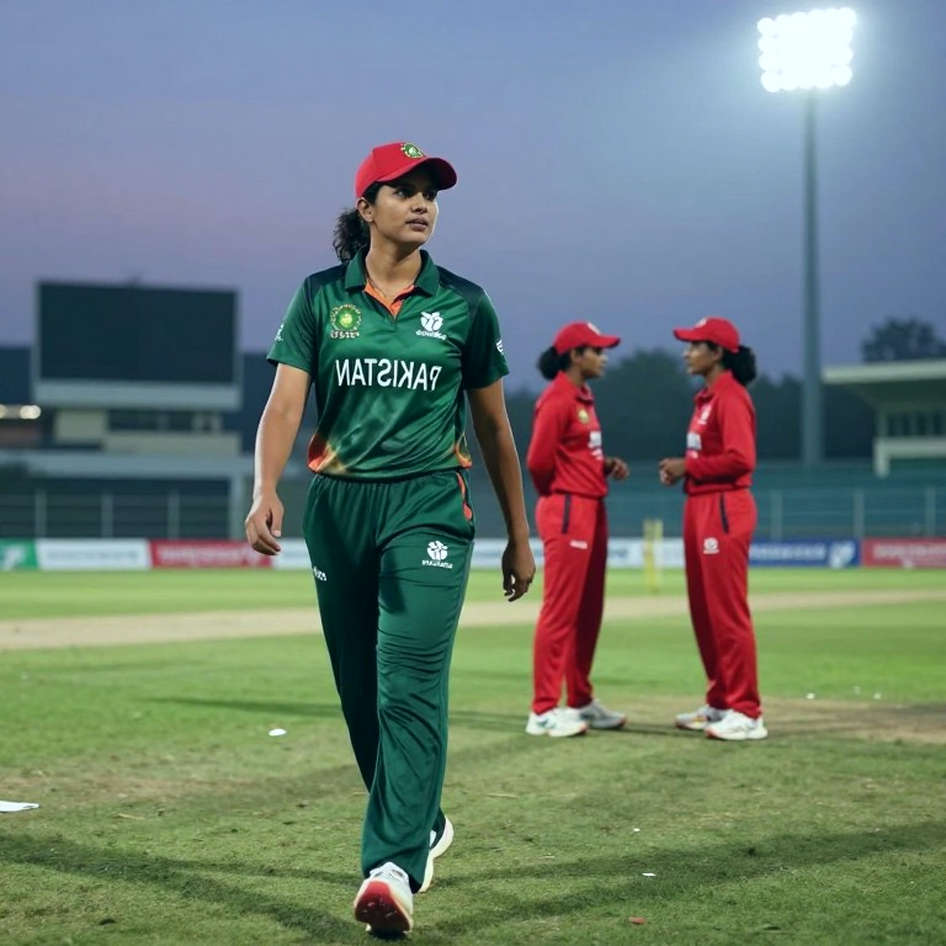
29 October 2026, Junction Oval, Melbourne. Melbourne Renegades against Sydney Thunder in the afternoon, Melbourne Stars against defending champions Hobart Hurricanes in the evening. The local start time for the second fixture was printed as seven ten — in the morning. Beside it, the Indian conversion read 1:40pm.
No calculator was required. Australian Eastern Daylight Time sits five and a half hours ahead of Indian Standard Time, so 7:10pm AEDT is exactly 1:40pm IST. A 7:10am start would have been 1:40am in India, and no Australian domestic league bowls its night fixture at seven in the morning, because at that hour there is no dew on the outfield, only empty seats.
The same page carried UK times. The opening match, 3:40pm in Melbourne, is 04:40 GMT. The page printed 5:40am UK. One hour out — and specifically out in a way that identifies the error rather than merely proving it. That is a template built for British Summer Time, which ends on the last Sunday of October, four days before this season begins. Both published UK times are an hour ahead of the truth.
A typo, then. I raise it not because typos interest me but because thirty-eight years on this beat have taught me one thing: the reliable detail is rarely where the noise is. Nine runs, a dropped catch, a session lost to rain — and sometimes a single mistranscribed hour.
Some careers turn on nine runs no one thought to count.
But the typo is not the page's real failing. The headline promises a full schedule and the body delivers none of it. Beside the copy sits a link to live match odds, and below it a request to subscribe. This is an aggregation page wearing the word preview.
—
The structure is straightforward. The twelfth edition of the Women's Big Bash League. Eight teams — Sydney Sixers, Sydney Thunder, Melbourne Stars, Melbourne Renegades, Adelaide Strikers, Brisbane Heat, Perth Scorchers, Hobart Hurricanes. 40 league matches, which is ten per team. Then a three-match finals system: Knockout, Challenger, Final, the last of them on 5 December 2026. Thirty-eight days in total, 43 matches.
That is fractionally more than one match every forty-two hours.
118 contracted players across eight squads, sizes ranging from 14 to 15 — meaning two clubs are operating at the minimum practical number. 26 overseas slots, of which roughly eleven appear to be England-contracted cricketers. And the list was already ageing before a ball was bowled: Hobart's frontline overseas top-order batter has been ruled out injured and replaced by Chamari Athapaththu. The replacement market opened in the off-season.
I have done this arithmetic before, on a different evening. On 23 July 2026 at Lord's, India were 191 for three chasing 229, Punam Raut on 86, Harmanpreet Kaur still there three days after her 171 not out at Derby. Anya Shrubsole took six for 46, the last seven wickets fell for 28, and India were all out for 219 — beaten by nine runs. I stopped opening with results that night.
Eight years later, on 2 November 2026 at DY Patil, India made 298 for seven, Shafali Verma 87, and bowled South Africa out for 246. A 52-run win, a first women's world title. I filed in the first person for the first time in twenty years and began with the crowd.
Both memories are relevant here, because the most useful thing to say about WBBL 2026 is that its value sits in its architecture rather than its fixtures. And architecture is the press box's business, not the fan's.
Ten matches, and one direct ticket
First place goes straight to the final. Second plays the Challenger and needs one win. Third and fourth play the Knockout and need two. A team finishing top after ten matches needs one victory for the title; a team finishing fourth needs three, having played the same ten games.
One match as the prize for a ten-match sample is the largest stake in the competition — and it rests on a sample small enough that two consecutive defeats redraw the table.
That is not a complaint. For broadcast the design is excellent: three high-stakes fixtures, a double chance for the top two, a fortnight of suspense. But it should be said plainly — this format rewards consistency over brilliance, and measures consistency across ten games.
The unbalanced draw
Here is a sum the page does not do. A full double round robin for eight teams is 56 matches, fourteen per side. The league stage is 40. Each team therefore plays ten of a possible fourteen against seven opponents — some twice, some once.
Equal matches, unequal opposition. And because first place carries a direct ticket to the final, that asymmetry is not a statistical footnote; it is attached to the probability of winning the trophy.
I cannot tell you who got the soft draw, because the draw matrix is not on the page. What I can tell you is that the question is not being asked, when it is the first question that should be. When Cricket Australia's official fixture list lands, that is the first thing to read.
Twenty-six slots, one board's pressure
The overseas quota is the most powerful competitive-balance lever in this league — more than the salary cap, more than any draft. It caps how much foreign talent a single attractive club can concentrate.
Roughly eleven of the 26 slots appear to belong to England central-contract players. That makes the league's overseas quality a single point of failure: an ECB rest directive, a bilateral window, the terms of an NOC, and three or four franchises can be hollowed out at once.
Which is why the real tactical currency here is not the quota but all-rounder density. Four squads carry four imports for a three-import XI. Somebody sits out every week. Coaches who invest in multi-skilled domestic players — Perry, Gardner, Sutherland, Knott, Prendergast, Tryon, Matthews, Knight — can fit their best four foreigners into a balanced side. That is craft produced by constraint, not philosophy.
One number on the page is wrong in a way that matters. Perth are listed with two overseas players, yet their captain is Sophie Devine, New Zealand's captain and a long-standing overseas signing in this league. Perth's figure should read three, which makes the league-wide total 27 rather than 26 — and removes Perth's status as the competition's most domestically anchored squad.
Fourteen players
Melbourne Stars and Melbourne Renegades carry fourteen; the other six carry fifteen. One name. Over 38 days and 43 matches, one name is the difference between cover and no cover. And one of those two clubs also carries four imports: high ceiling, low floor. Two injuries in the same discipline and the season folds, because the replacement market has the same twenty-five names everyone else wants.
I learned to count bodies in an empty ground. At Old Trafford in July 2026 I walked to the match instead of driving. Stuart Broad, dropped for the first Test, took six for 31 in the third and reached his 500th wicket in front of nobody. What I remember is the sound — the edge carrying flat to the boundary boards, an appeal with no answer behind it, the gulls. I wrote 900 words before using the word crowd, and then only to describe its absence.
Since then I have listened before I looked. Read a 43-match calendar that way and you hear stretching, rotation, and a name omitted from the team sheet every fortnight for rest.
Hobart: not a defence, a rebuild
Hobart won last season's final by eight wickets against Perth. That is the only result on the page.
They will begin this season without the captain and opening batter who retired, and without the overseas top-order batter ruled out injured. Nicola Carey takes the captaincy — a continuity appointment, and a sensible one. Athapaththu replaces the injured batter, and it is not a like-for-like swap: a left-handed opener who bowls off-spin adds a bowling option while changing the shape of the top order. Scorecards rarely record that kind of exchange.
The ledger says this: the defending champion is the highest-variance top-tier side in the competition, having lost its captain and a frontline import in one off-season. Champion's aura is a linguistic convenience, not a squad report.
The captaincy pipeline
Perry, Sutherland, McGrath, Carey, Devine, Redmayne, Litchfield, Molineux. Two of those names belong to a different project: Sutherland at the Stars and Litchfield at the Thunder, both early-career Australian internationals handed franchise captaincy on purpose. WBBL doubles as a leadership academy for the national side, which is good for Australian cricket and genuinely risky for a 21-year-old who loses two in a row and sits in front of a camera.
Opening day at Junction Oval
Four teams, one ground, one day. That is a logistics decision — travel, hotels, production — dressed as a launch event. It also means neither Melbourne side gets a true home advantage: Junction Oval is Cricket Victoria's headquarters and is used by both Stars and Renegades programmes. Technically neutral; practically nobody's.
And late-October Melbourne is spring. Rain risk is real, the 7:10pm start invites dew, and two DLS results inside the first ten matches would distort a table where every half-point sits next to a direct ticket to the final.
—
Here is what the material actually supports, and what it does not.
This is a reference document, not an analysis. There is not one batting average, strike rate, economy rate, powerplay figure or ground dimension in it. Any tactical inference would be invented. What is reliable is the framework — calendar, format, squads, quota.
The correct professional output is a roster typology, not a ladder prediction. No defensible ranking can be built from this page.
Availability, not ability, is the dominant variable this season. Thirty-eight days, 43 matches, 27 overseas slots drawn largely from one board's contracted pool, two clubs at fourteen players. Put those numbers together and you have an injury-management story nobody is writing.
The most revealing commercial signal on the page is editorial. The article cross-links to WPL 2027 auction coverage — sold and unsold lists, remaining purse, updated squads — while placing the WBBL schedule below it. That is a traffic hierarchy, not an accident: in women's cricket the auction is now the bigger story and the league schedule the smaller one. Which points at WBBL's real strategic problem — not product quality but calendar position, competing for the same fifty players as the WPL, The Hundred and the WCPL.
And here I have to be careful with my own method. I have argued that the ten-match draw and the direct-to-final reward are big. They are. They are also insufficient. A team that finishes top will owe part of it to the draw, and just as much to its pace attack, its top order's form, and winning the toss under dew. I have a habit of letting a single hinge carry a whole career — nine runs, a dropped catch, a lost session. The habit tells the truth and sometimes oversells it.
The largest failing of the page is not the typo. It is that the headline promises a full schedule the body does not contain. Use Cricket Australia's official fixture as the source of truth.
And note, without verdict, that the page carries a live-odds link. It breaches no rule. But placing betting odds beside coverage of a league that cannot guarantee its own players' availability implies that prediction is possible. In a ten-match season, prediction is not possible. Only probability is.
—
Three things to watch, none of them on the field.
Replacement signings: a club making a third mid-season change is either in trouble or making a title push. Either way it says more than any squad list.
The team sheet: when a senior international is rested from a low-leverage fixture, workload accounting has begun, and it will shape the table.
The draw matrix: find out who plays whom twice. If one club has a demonstrably softer path, half this season's analysis gets rewritten from that single line.
—
The page will still read 7:10am. On 29 October, at 7:10pm, the first ball will be bowled at Junction Oval, the dew will arrive, and somebody's first hour as captain will begin.
I do not know who wins this season, and I will not pretend to, because I have not been given a single performance number to work with. I do not know who got the soft draw, because that list is not public.
What I know is this: 27 overseas players, 38 days, ten matches, one direct ticket. The whole politics of the season sits inside those four numbers — and its weakest link is not the one being talked about most. It is a fourteen-player squad carrying four imports, whose name appears nowhere on that page with a warning attached.
One thing is settled before a ball is bowled. When the season ends, one team will own an innings nobody bothered to log — an over, a dropped catch, a session the weather took. And on 5 December, when the final is done, that passage may turn out to be the reason. I will be there to count it.